
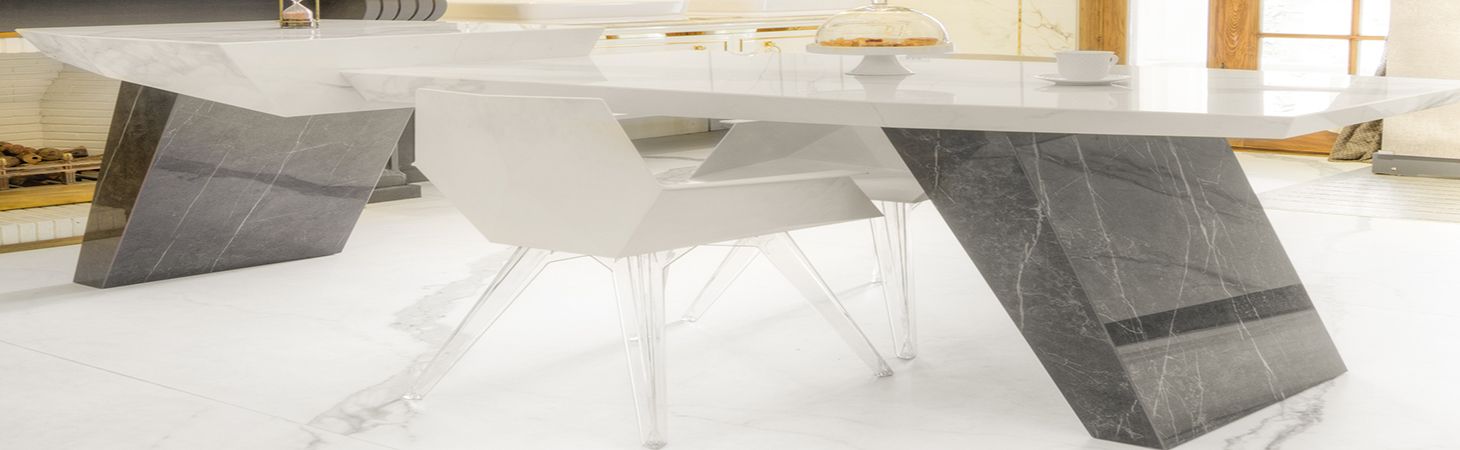
Porcelain is a member of the large ceramic family, and in modern classification, manufacturers of this category of products apply the term porcelain to tiles with special quality and construction. Porcelain includes two types, polished and glazed, and no discoloration, dimensional defects or warping are seen in it.
Features of Porcelain
High flexural strength (two to three times that of granite stones) - Low water absorption, down to less than two percent - Resistance to cold and freezing - High chemical resistance and resistance to staining - High abrasion resistance (long life and high shine) - Color stability in sunlight - Ability to be produced in different sizes and a wide variety of designs and colors - Noncombustible
Applications of Porcelain in Industry
Porcelain ceramics are used in many residential and commercial structures; in addition to their beauty, they have high strength and are resistant to chemicals, and for this reason are the best choice for domestic and industrial kitchens, hospitals and laboratories.
Another area of porcelain use concerns decorations and decorative items, where it is used to make tables and dinnerware.
nova - palermo Brand Porcelain
zigma Brand Porcelain
Porcelain Maintenance and Care
Porcelain ceramics are easily cleaned with water and ordinary detergents.
History and Further Information About Porcelain
Porcelain was made in China during the Yuan dynasty between 1279 and 1368. In later years, the English achieved a new composition by adding cow bone ash to clay, feldspar and quartz. This type of porcelain is produced at a lower temperature than true porcelain, but the bone ash allows its structure to remain translucent.
Porcelain is a uniform product made from clay, feldspar or granite, and silica under high pressure and heat, which is white and dense after firing. This product is the latest technology in the ceramics industry and is used for building floors and facades because of its beauty and special advantages.
Today, various types of porcelain are produced around the world, and bone porcelain is highly popular because of its distinctive translucency and is used most extensively in the United States and Britain.